


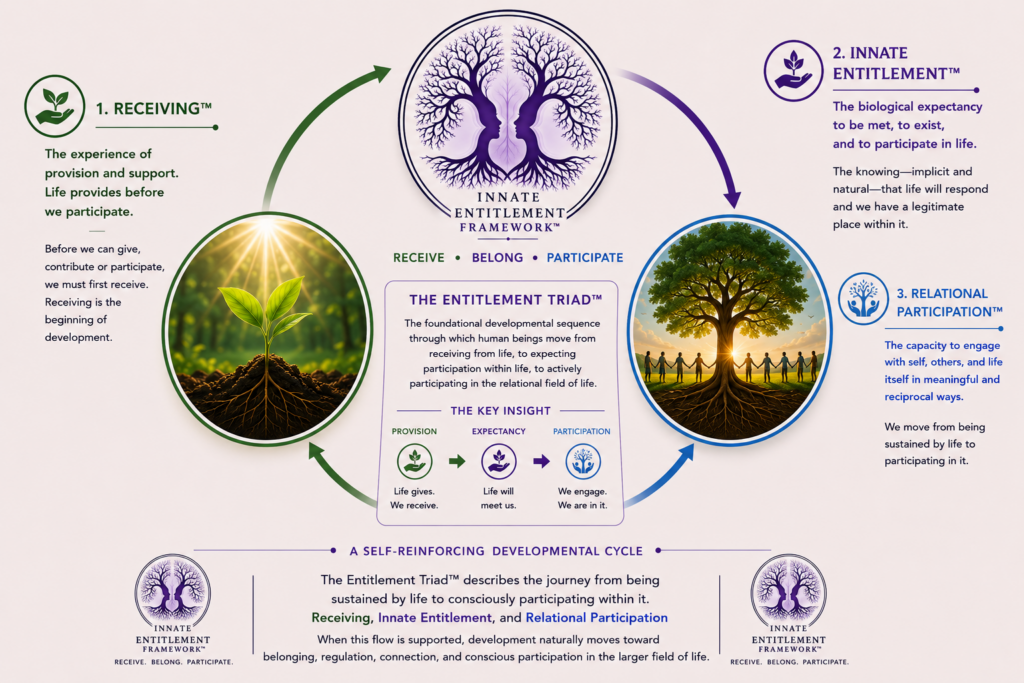
Understanding the Relationship Between Receiving, Entitlement, and Participation Human development begins long before we become aware of ourselves as separate individuals. Before we can participate in life, contribute to relationships, or establish healthy boundaries, we must first receive what is necessary for our existence. The Entitlement Triad™ is a developmental model within the Innate Entitlement […]
Category Archives: The Framework (IEF™)
04
Jun
Jun
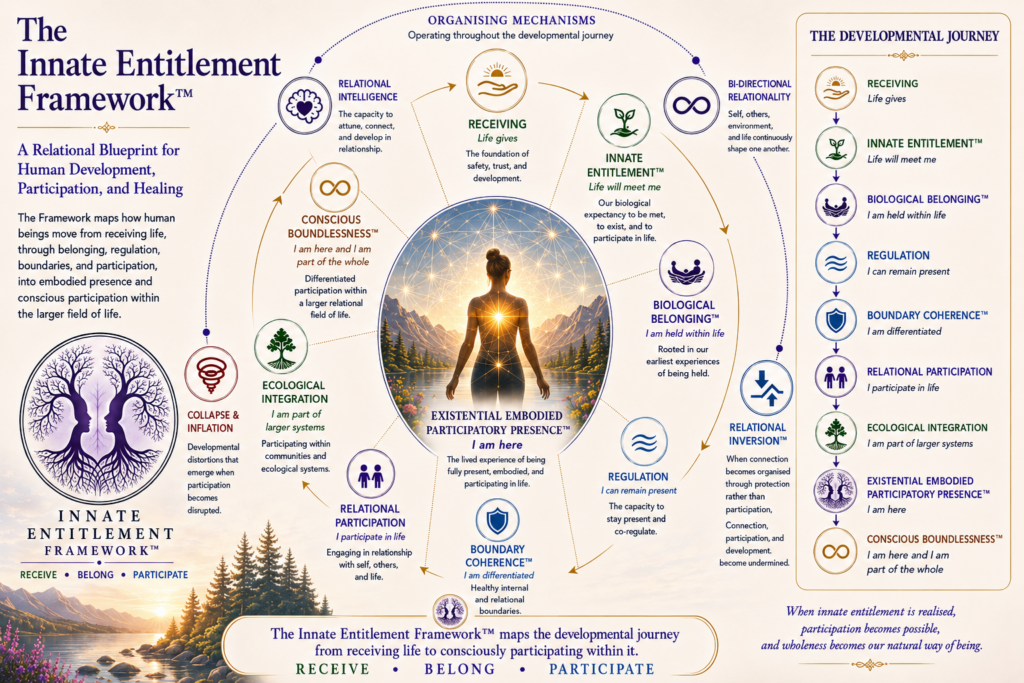
A Visual Map of Human Development, Relationship, and Healing When people first see the symbol of the Innate Entitlement Framework™, they often notice two faces, a tree, roots, branches, and the subtle contours and shading that bring the image to life. What they are actually seeing is a visual representation of the Framework itself. This […]
19
May
May
Core concepts for understanding human development, emotional organisation, relational participation, and healing through the Innate Entitlement Framework™ Emotional suffering is often understood through multiple established lenses. Trauma. Attachment. Diagnosis. Cognitive patterns. Nervous system dysregulation. Relational history. These perspectives offer valuable ways of understanding human experience. The Innate Entitlement Framework™ does not seek to replace them. […]

14
May
May
Figure 3. Restoration Begins in Relationship Photograph taken by the author at Three Cliffs Bay, Gower. The eye-like opening in the sky and the light emerging through the clouds resonated deeply with the theme of restoration: the idea that protective adaptations may obscure access to connection, participation, and openness, but they do not extinguish the […]
The Framework (IEF™)
Relational Inversion™: From Disruption to Restoration within the Innate Entitlement Framework™
14
May
May
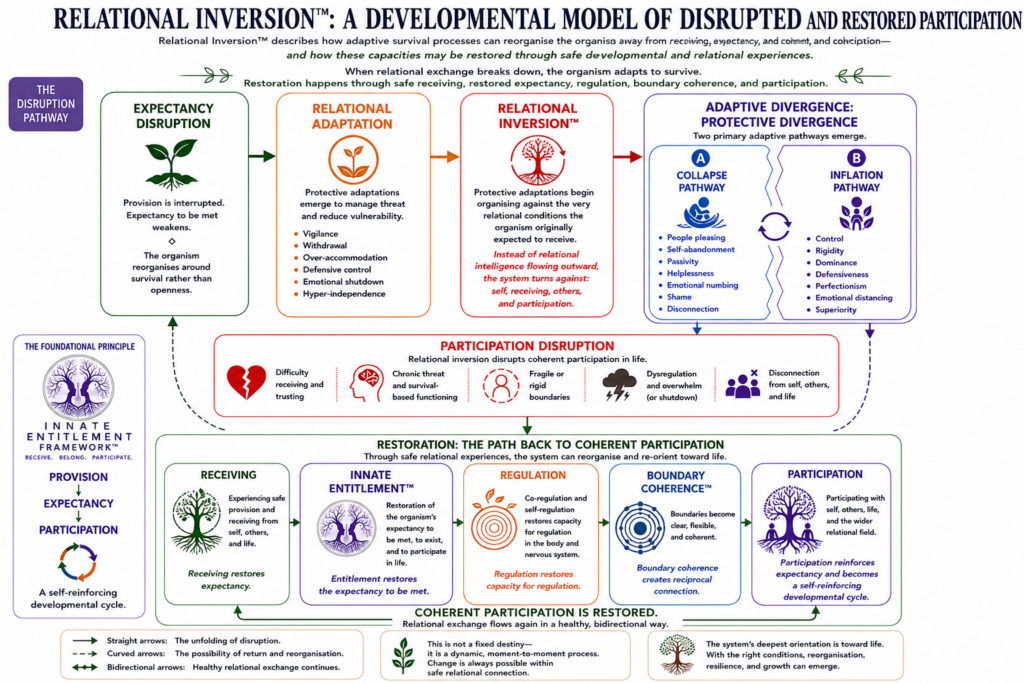
Figure 2. Relational Inversion™: From Disruption to Restoration within the Innate Entitlement Framework™ Most models of psychological distress focus primarily on symptoms, diagnoses, trauma, or coping strategies. While each offers valuable clinical insights, the Innate Entitlement Framework™ approaches emotional suffering from a different developmental perspective. Rather than beginning with pathology, the Framework begins with relationship. […]
20
Apr
Apr
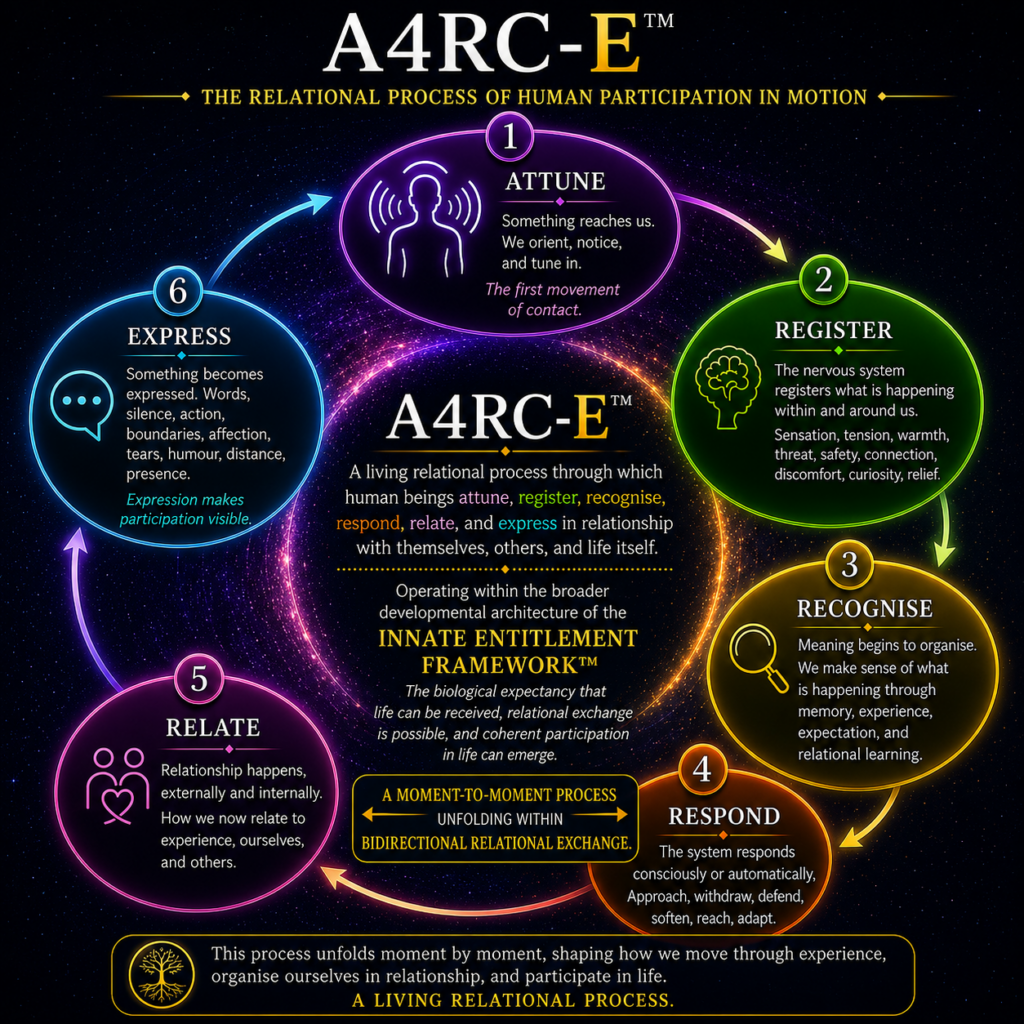
Have you ever noticed how two people can experience the same moment, and respond in completely different ways? One person receives kindness and softens. Another becomes uncomfortable, suspicious, or pulls away. One person asks for help with ease. Another apologises for needing anything at all. One person hears feedback and reflects. Another becomes defensive, shuts […]
The Framework (IEF™)
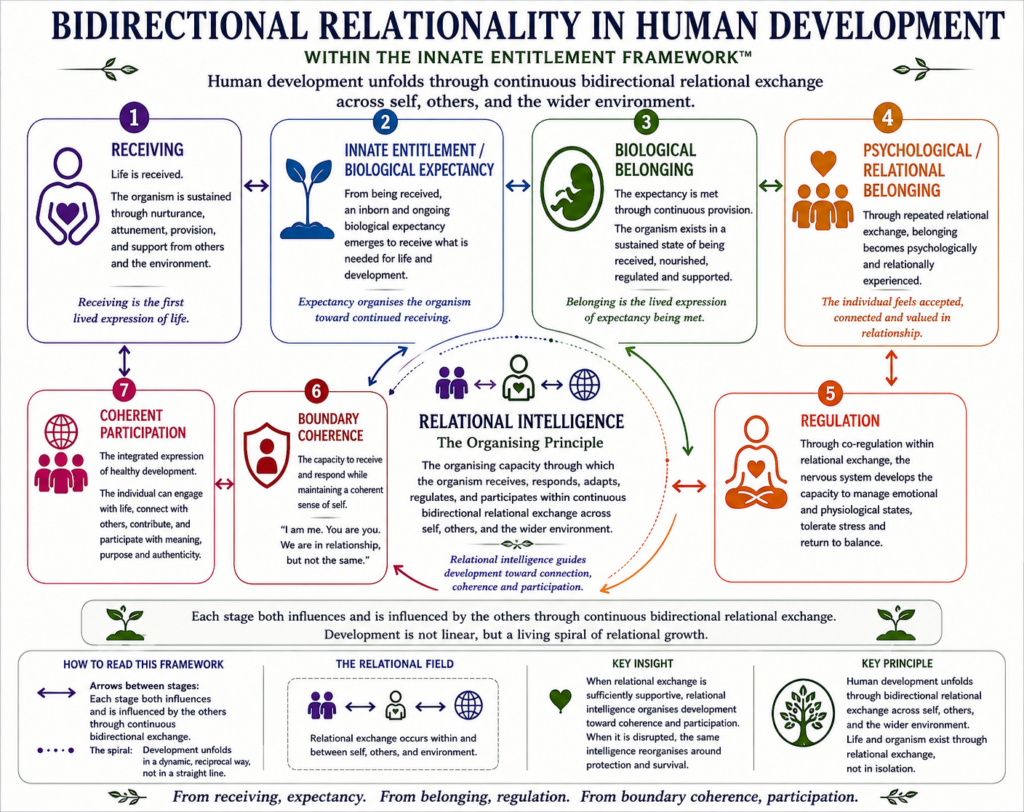
Bidirectional Relationality in Human Development | Innate Entitlement Framework™
20
Apr
Apr
Figure 1. Bidirectional Relationality in Human Development within the Innate Entitlement Framework™ This figure illustrates human development as a process of continuous bidirectional relational exchange across self, others, and the wider environment. Development is not linear. It unfolds through ongoing reciprocal interaction in which the organism exists in relationship, responds to relational conditions, and is […]

03
Apr
Apr
We often think of life as something we have to learn, manage, or figure out. But what if the most important part of being alive happened before we knew anything at all? What if our relationship with life didn’t begin with effort — but with receiving? You didn’t learn to be alive. You […]
Conceptual Review Series, The Framework (IEF™)
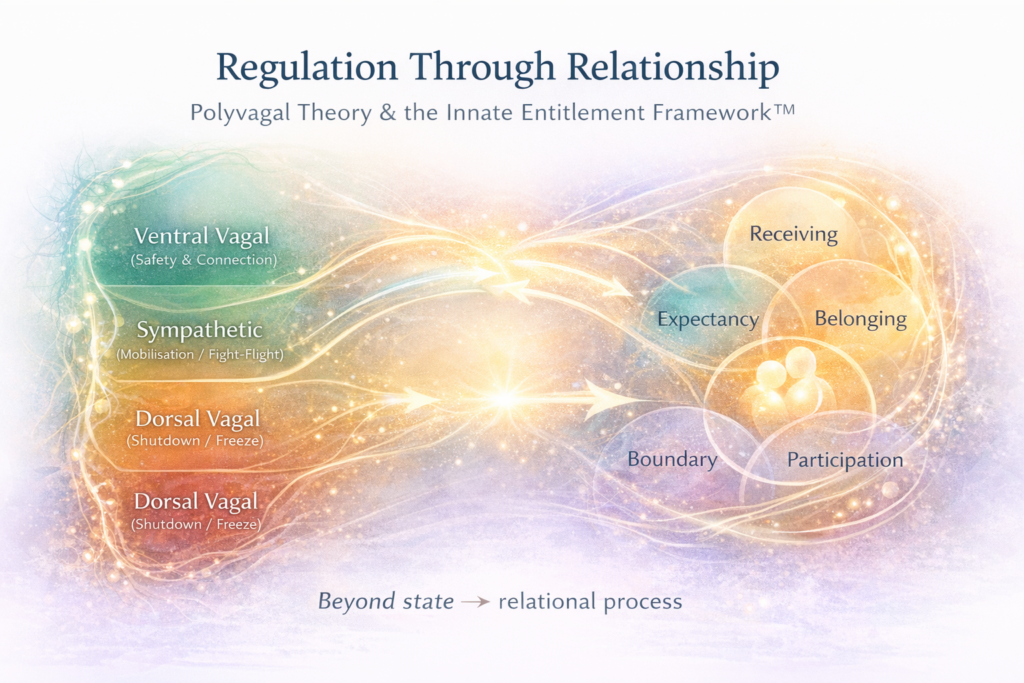
Polyvagal Theory and Emotional Regulation: A Relational View
30
Mar
Mar
Why do we feel calm with some people, and unsettled with others—sometimes without knowing why? Polyvagal Theory helps us understand this. Much of this has been explained through the work of Stephen Porges, who showed how our nervous system is constantly responding to cues of safety and threat in the world around us. But what […]
Conceptual Review Series, The Framework (IEF™)
Attachment Theory and the Innate Entitlement Framework™: Where They Meet and Where They Differ

29
Mar
Mar
Why do we relate the way we do in relationships? Attachment theory tells us that our early relationships shape how we connect, trust, and respond to others. Most people can recognise themselves somewhere in those patterns. But what if those patterns don’t begin where we think they do? What if they begin even earlier—before […]
- 1
- 2