


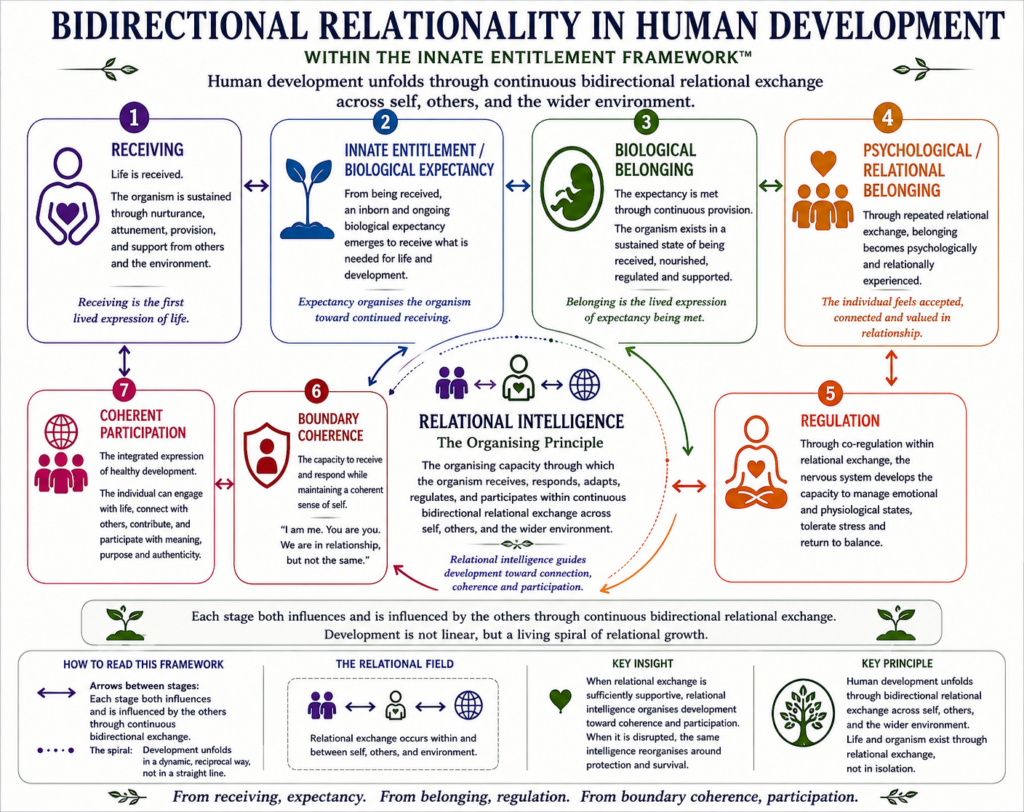
Figure 1. Bidirectional Relationality in Human Development within the Innate Entitlement Framework™
This figure illustrates human development as a process of continuous bidirectional relational exchange across self, others, and the wider environment. Development is not linear. It unfolds through ongoing reciprocal interaction in which the organism exists in relationship, responds to relational conditions, and is shaped through continuous exchange.
At the centre of this framework is relational intelligence: the organising capacity through which the organism receives, responds, adapts, regulates, and participates within continuous bidirectional relational exchange across self, others, and the wider environment.
Within the Innate Entitlement Framework™, healthy human development unfolds through the following developmental architecture:
Receiving
Innate Entitlement (Biological Expectancy)
Biological Belonging
Psychological / Relational Belonging
Regulation
Boundary Coherence
Coherent Participation
Although presented in stages for clarity, these are not separate or strictly linear processes. Each stage both influences and is influenced by the others through continuous relational exchange.
Most models of psychological development focus on trauma, attachment, cognition, or symptom formation. The Innate Entitlement Framework™ offers a complementary perspective, organising human development around the relational conditions that allow coherent participation in life to emerge.
Rather than beginning with dysfunction, this framework begins with development itself.
Human Development Begins in Relationship.
Human development does not begin in isolation.
Before psychological development, before conscious meaning-making, before language, the organism already exists within sustained biological relationship.
Life is first received.
From the earliest stages of development, the organism is continuously sustained through provision, containment, oxygenation, nourishment, regulation, and environmental support.
Developmental biology reflects this relational reality.
Embryonic development does not unfold through isolated self-construction.
It unfolds through continuous organism–environment exchange, signalling, responsiveness, adaptation, and provision.
Cells respond to positional information.
Tissues influence one another’s development.
Implantation itself depends upon successful reciprocity between the developing organism and the uterine environment.
Development emerges through interaction.
Not isolation.
Within the Innate Entitlement Framework™, this biological reality forms the developmental basis for what is described as innate entitlement: the organism’s emerging biological expectancy that life will continue to provide what is needed for survival and development.
Receiving
Receiving comes first.
Life is received before it is understood.
Before the organism can regulate, relate, or participate, it must first be sustained.
Receiving refers to the foundational reality that life is initially given through relationship with the environment.
The organism is sustained through nurturance, provision, containment, oxygenation, regulation, and environmental support.
This is the first lived condition of development.
Receiving is not passive weakness.
It is the biological condition that makes development possible.
When receiving is sufficiently continuous, the organism begins organising around continued provision.
Innate Entitlement (Biological Expectancy)
From being received, expectancy emerges.
Innate entitlement refers to the organism’s biological expectancy to receive what is needed for life and development.
This is not a belief.
It is not a cognitive idea.
It is not a personality trait.
It is a pre-psychological developmental organisation emerging through sustained biological relationship.
Life is received.
Life continues.
Through repeated provision, the organism begins organising around expectancy.
This expectancy becomes a biological orientation toward continued receiving, support, and survival.
This aligns conceptually with predictive biological organisation, in which living systems organise around expectation shaped through prior relational conditions.
When this expectancy is sufficiently supported, openness becomes possible.
When it is repeatedly disrupted, survival adaptation begins to reorganise the system.
Biological Belonging
When expectancy is continuously met, biological belonging emerges.
Biological belonging refers to the organism’s sustained condition of being continuously received, nourished, regulated, contained, and supported within a relational environment.
This exists before psychological belonging.
Before a person can consciously feel accepted, connected, or valued, the organism has already existed within biological relationship.
Biological belonging is the lived expression of innate entitlement being continuously met.
The organism is not merely surviving.
It is being received.
This distinction matters.
Because later experiences of belonging do not emerge from nowhere.
They develop upon earlier relational foundations.
Psychological / Relational Belonging
As development continues, belonging becomes psychologically and relationally experienced.
Psychological belonging refers to the lived human experience of being:
connected
accepted
valued
held within relationship
This develops through repeated relational exchange in which the individual receives, responds, and is meaningfully met.
This aligns with established attachment concepts such as secure relational base, while extending the developmental timeline to include earlier organismic foundations.
When belonging develops sufficiently, the nervous system can settle.
Vigilance reduces.
Safety becomes more accessible.
When belonging is disrupted, individuals may experience:
disconnection
relational insecurity
fear of closeness
difficulty trusting support
Regulation
Regulation refers to the nervous system’s capacity to maintain emotional and physiological stability.
This does not develop in isolation.
It develops through co-regulation within relational exchange.
Through sufficiently supportive interaction across self, others, and environment, the organism develops increasing capacity to:
manage emotional states
tolerate stress
return to balance
Regulation is not simply an individual skill.
It is relationally organised capacity.
This aligns with polyvagal perspectives, co-regulation research, and allostatic models of adaptive physiological regulation.
When disrupted, regulation may become organised around:
anxiety
overwhelm
shutdown
hypervigilance
Boundary Coherence
Boundary coherence refers to the capacity to receive and respond while maintaining a coherent sense of self within relationship.
This is the developmental process through which the individual increasingly comes to recognise:
I am me.
You are you.
We are in relationship, but not the same.
Boundary coherence allows connection without collapse.
Protection without rigidity.
Participation without loss of self.
When sufficiently developed, individuals are increasingly able to:
express themselves clearly
maintain internal coherence
engage without over-merging
connect without becoming overwhelmed
When boundary development becomes disrupted, individuals may move toward different adaptive patterns.
Disruption may emerge through a range of relational and developmental conditions, including:
deprivation
neglect
inconsistency
trauma
intrusion
enmeshment
over-accommodation
over-nurturing without differentiation
boundary collapse environments
relational over-control
These conditions can interfere with the development of coherent relational organisation.
Common adaptive expressions may include:
Boundary Collapse
people-pleasing
over-merging
self-abandonment
difficulty expressing need
fear of disconnection
Boundary Inflation
rigidity
defensiveness
control
emotional distancing
difficulty receiving support
Distorted Entitlement
At times, disrupted development may also contribute to inflated or dysregulated expressions of entitlement as the term is commonly understood in everyday language:
self-importance
grandiosity
relational dominance
excessive expectation without reciprocity
narcissistic defensive organisation
Within the Innate Entitlement Framework™, these are not understood as expressions of healthy innate entitlement.
They reflect disrupted relational development and distorted participation rather than coherent developmental organisation.
Healthy entitlement refers to the organism’s biological expectancy to receive what is needed for life and development within reciprocal relational exchange.
Boundary coherence is therefore not simply about protection.
It is about balanced relational organisation, differentiation, reciprocity, and coherent participation.
Coherent Participation
Participation is the integrated expression of healthy developmental organisation.
It reflects the capacity to:
engage with life
connect with others
contribute meaningfully
participate with authenticity
move forward with purpose
Participation reflects coherent relational organisation.
The individual is no longer primarily organised around survival.
They are increasingly able to participate in life.
This is not perfection.
It is coherent engagement.
Bringing It All Together
Attachment theory has demonstrated that relational environments shape emotional development.
Polyvagal theory has highlighted how the autonomic nervous system continuously organises around safety and threat.
Predictive and biological models demonstrate how living systems organise around expectancy shaped through prior conditions.
The Innate Entitlement Framework™ integrates these perspectives through a developmental lens organised around relational exchange.
Within this framework, human development unfolds through continuous bidirectional relationality across self, others, and the wider environment.
When relational exchange is sufficiently supportive, relational intelligence organises development toward:
receiving
expectancy
belonging
regulation
boundary coherence
coherent participation
Healthy development is therefore not a fixed trait.
It is an unfolding relational process.
Understanding healthy developmental organisation is only part of the picture.
When relational exchange becomes persistently disruptive, the same relational intelligence may reorganise around protection rather than participation.
That process is explored in the next article.
Previous: Academic Defence — Conceptual Foundations of the Innate Entitlement Framework™
Next: Relational Inversion™: From Disruption to Restoration
© Janaína Mahé. All rights reserved.
The Innate Entitlement Framework™, Receiving™, Innate Entitlement™, Biological Belonging™, Boundary Coherence™, Relational Participation™, Environment as Second Skin™, Relational Inversion™, Nervous System Achievement™, Mindful Attribute Boundaries™, Existential Embodied Participatory Presence™, Conscious Boundlessness™, and associated concepts, models, diagrams, terminology, and developmental architecture are the intellectual property of Janaína Mahé and may not be reproduced, adapted, taught, distributed, or commercially used without written permission.
Framework Development Notice
The Innate Entitlement Framework™ is currently undergoing an advanced phase of conceptual and architectural refinement.
The articles published on this website reflect the ongoing development of the Framework and document its evolving theoretical foundations. During this process, some concepts, terminology, sequences and relationships between articles may be refined as part of a rigorous programme of conceptual auditing, theoretical comparison and literature review.
This work reflects the normal development of an original theoretical framework and is intended to strengthen its conceptual coherence, scientific rigour and long-term academic contribution.
The current articles therefore represent the continuing evolution of the Innate Entitlement Framework™, while the current phase of conceptual architecture is being finalised.
About the Author & the Framework
Janaína Mahé is the developer of the Innate Entitlement Framework™, an original conceptual framework exploring human development, relational participation and psychological wellbeing.
This article forms part of the ongoing conceptual development of the Framework.
Continue exploring the Framework
→ Why the Innate Entitlement Framework™ Matters