


By Janaína Mahé, MBACP Published 18th September 2026 Last night, I dreamt that it was my first day at university. The dream seemed to last the entire night. At the beginning, a childhood friend was there with me. We had once been best friends and, when we were young, lived near one another. In […]
Author Archives: Janaina Mahe
07
Sep
Sep
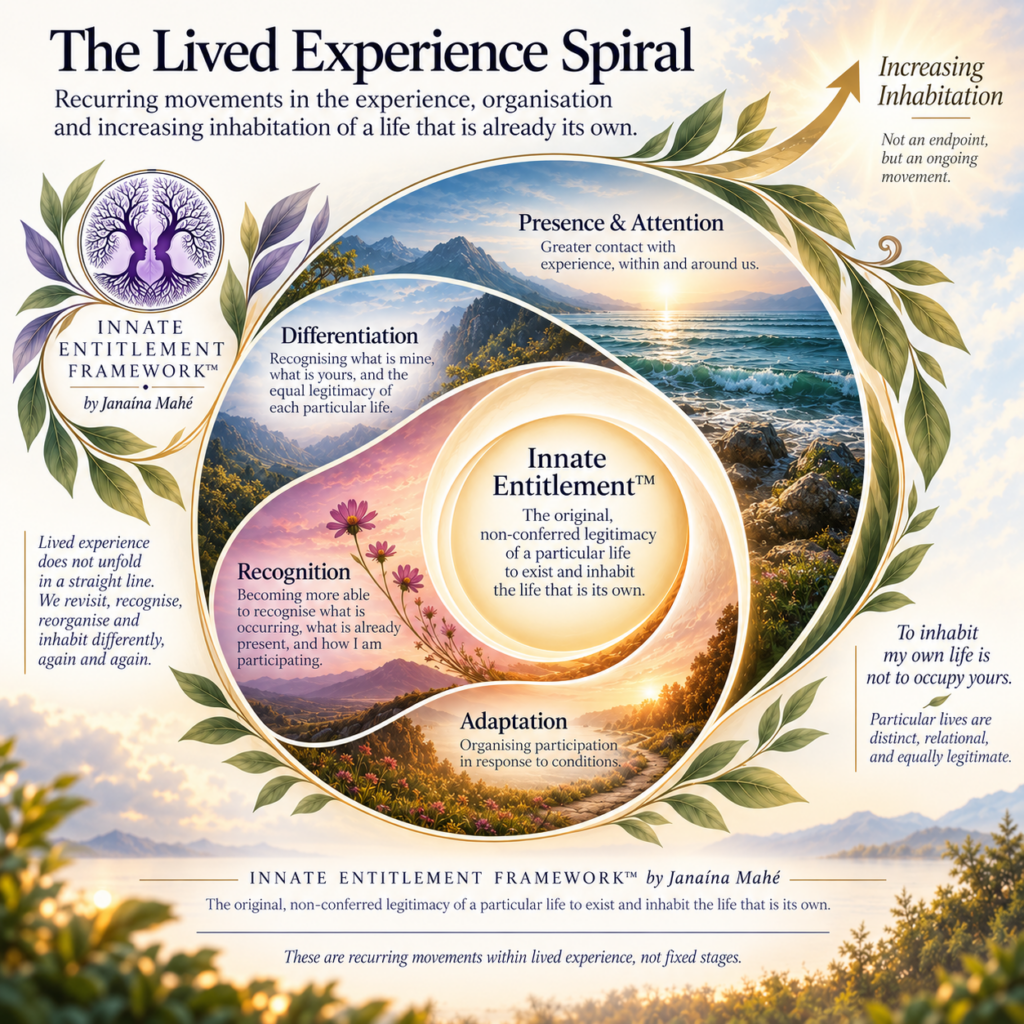
New to the Innate Entitlement Framework™? Begin with Why the Innate Entitlement Framework™ Matters to understand the wider Framework before reading the lived experience from which it emerged. Before the Framework became theory, the questions it explores were already present in a life being lived. The Innate Entitlement Framework™ did not begin with an attempt […]
05
Sep
Sep
New to the Innate Entitlement Framework™? Begin with Why the Innate Entitlement Framework™ Matters for an introduction to the Framework and its wider architecture. There are many ways in which we come to experience belonging. We can belong within a family, a friendship, a relationship, a community, a culture or a place. We can feel […]
02
Sep
Sep
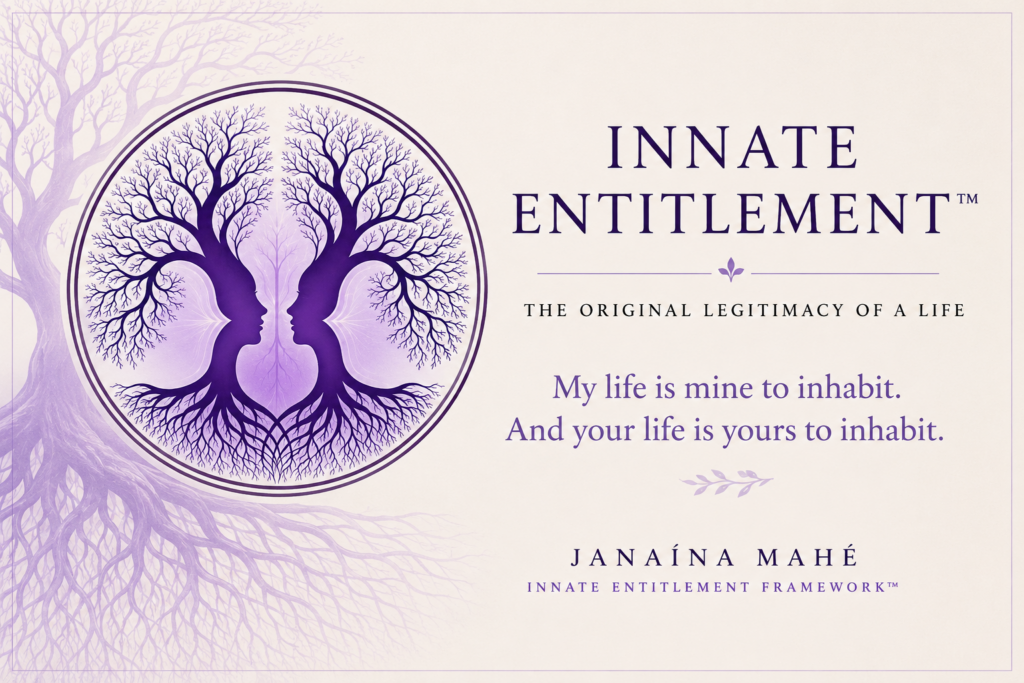
New to the Innate Entitlement Framework™? Begin with Why the Innate Entitlement Framework™ Matters for an introduction to the Framework and its wider architecture. The Symbol of Innate Entitlement™ The emblem of the Innate Entitlement Framework™ holds something of the movement explored in this article. A living form is rooted, particular and continually expanding. Two […]
01
Sep
Sep
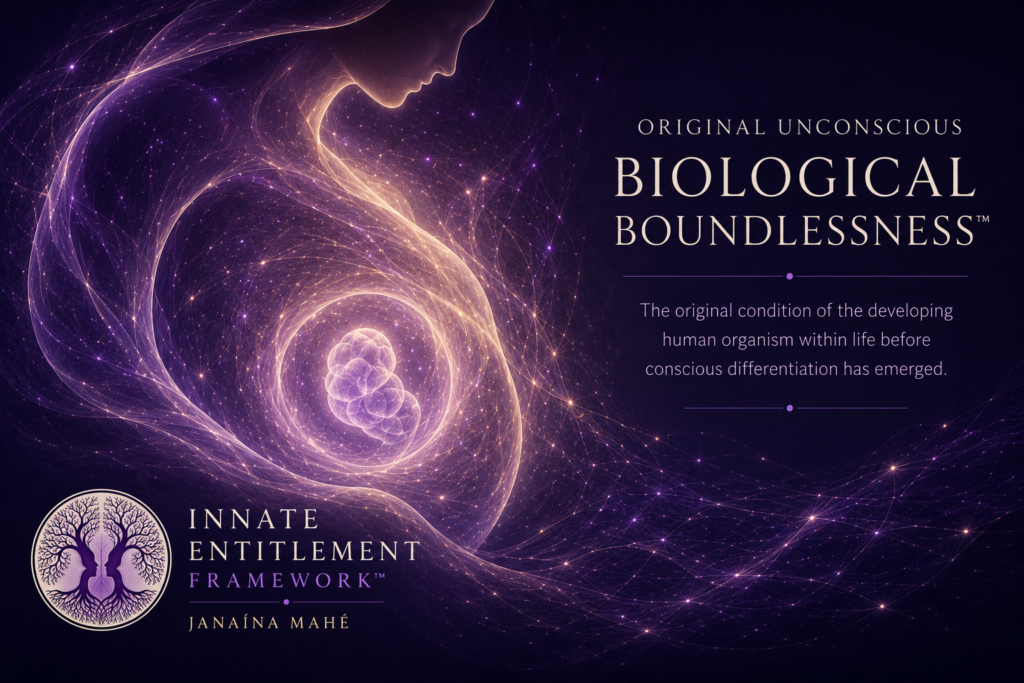
New to the Innate Entitlement Framework™? Begin with Why the Innate Entitlement Framework™ Matters for an introduction to the Framework and its wider architecture. Human development begins within life before conscious differentiation has emerged. There is already a particular developing human organism. Receiving. Responding. Developing. Affecting and being affected by the biological and environmental conditions […]
20
Aug
Aug
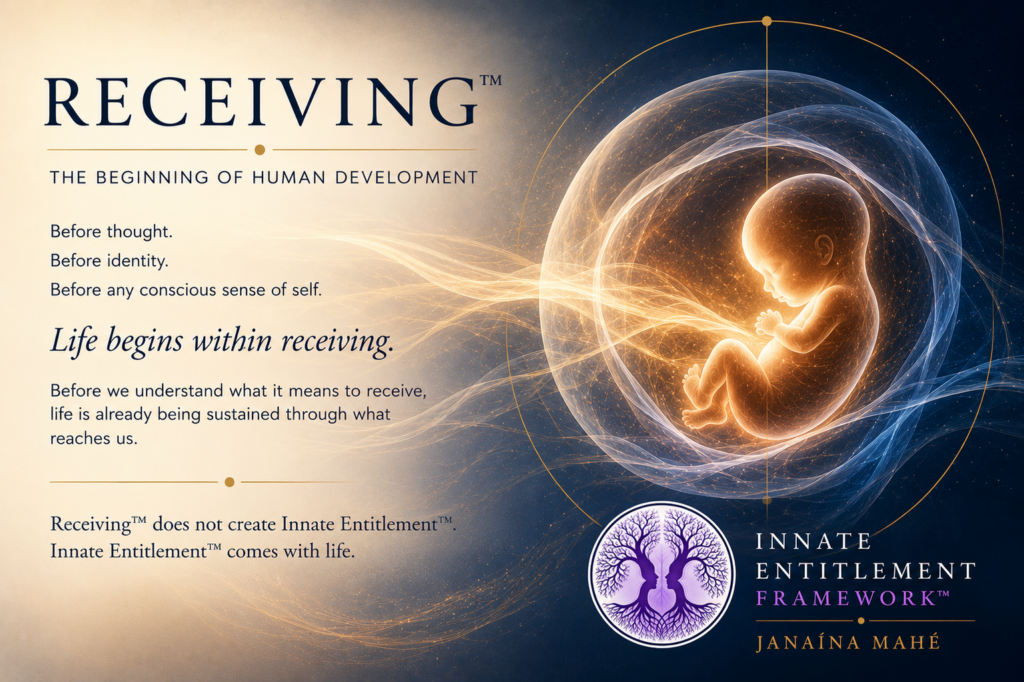
New to the Innate Entitlement Framework™? Begin with Why the Innate Entitlement Framework™ Matters for an introduction to the Framework and its wider architecture. Human development begins before thought. Before identity. Before any conscious sense of self. It begins within receiving. Before we understand what it means to receive, life is already being sustained […]
18
Aug
Aug
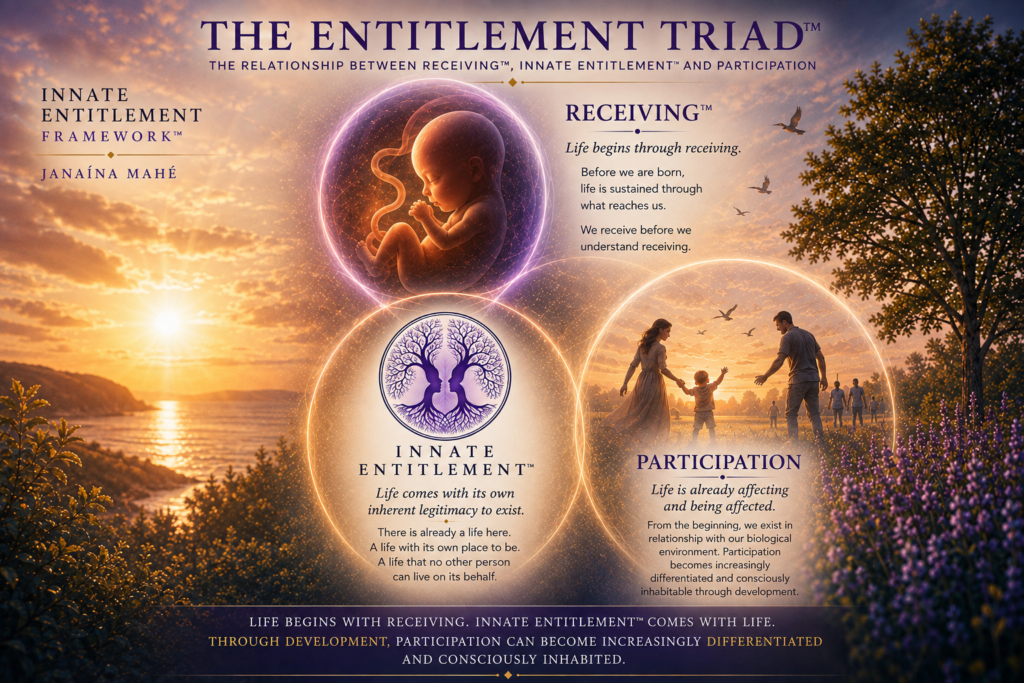
Receiving™, Innate Entitlement™ and Participation New to the Innate Entitlement Framework™? Begin with Why the Innate Entitlement Framework™ Matters for an introduction to the Framework and its wider architecture. Human life does not begin as an isolated individual encountering the world from the outside. From the beginning, life is already taking place within conditions […]
15
Aug
Aug
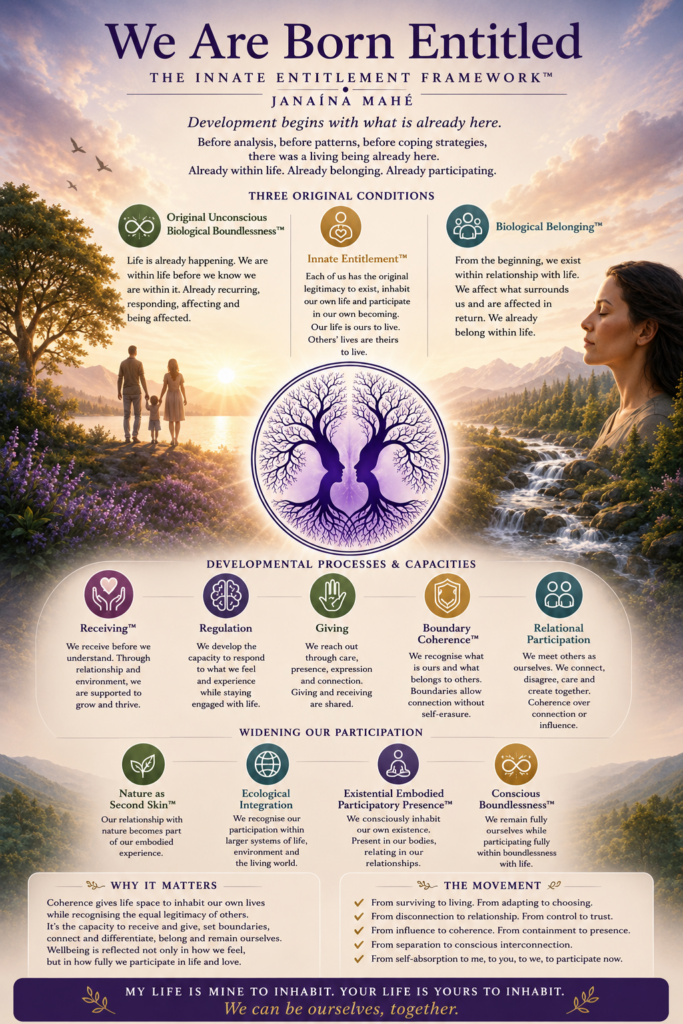
We Are Born Entitled: The Innate Entitlement Framework™ Emotional struggles are often understood through the lenses of trauma, attachment, diagnosis, or patterns of thinking. These perspectives can be deeply valuable. The Innate Entitlement Framework™ begins from a different starting point. It asks: What is already present at the beginning of life, and what conditions support […]

17
Mar
Mar
Many people come to counselling expecting advice. They hope the therapist will tell them what decision to make, what direction to take, or how to fix a difficult situation in their lives. It is understandable. When life feels overwhelming, we naturally look for clarity and solutions. But counselling often begins somewhere slightly different. Rather than […]

17
Mar
Mar
Many people struggle with setting boundaries in their relationships. They may find themselves agreeing to things they do not want, feeling responsible for other people’s emotions, or becoming overwhelmed by the expectations placed on them. Even when someone understands that boundaries are important, it can still feel extremely difficult to say “no,” express a need, […]