


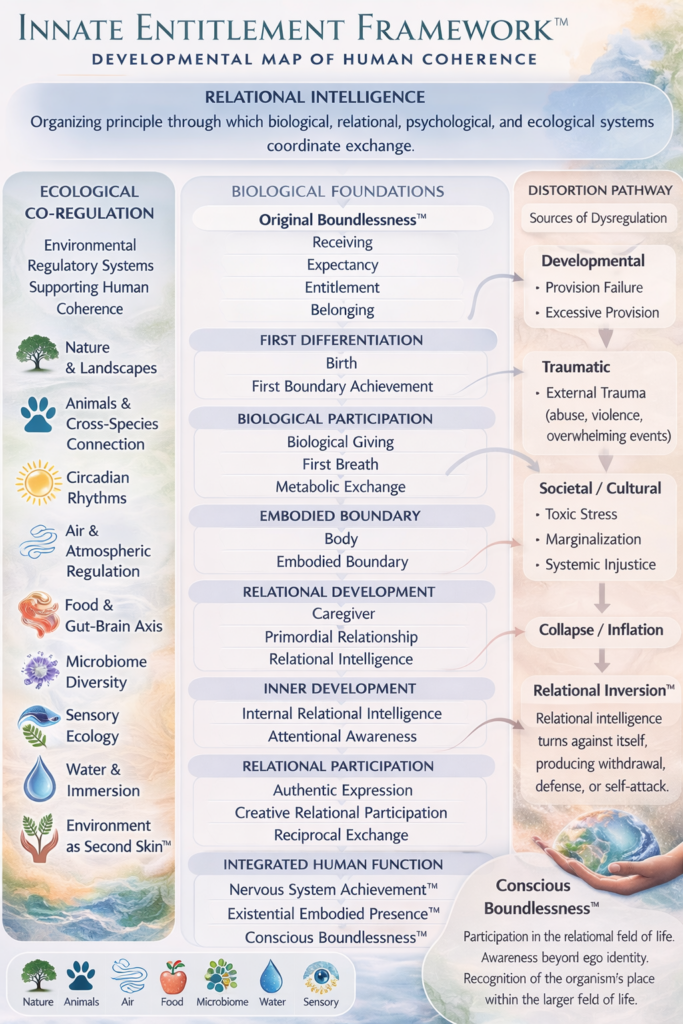
Figure 1. Developmental Architecture of the Innate Entitlement Framework™
The diagram illustrates the developmental architecture of the Innate Entitlement Framework™, presenting a systems model of human coherence in which biological regulation, relational development, boundary formation, internal awareness, and ecological participation interact across the lifespan
Visual Overview of the Innate Entitlement Framework™
The diagram presented above illustrates the developmental architecture of the Innate Entitlement Framework™ (IEF™). It provides a structural overview of how human coherence emerges through the interaction of biological regulation, relational development, psychological organisation, and ecological participation across the lifespan. This overview functions as a conceptual map of the framework, outlining the organising principles and developmental processes that structure the theoretical model presented in this review.
The Innate Entitlement Framework™ can be understood as a systems architecture of human coherence. Rather than presenting isolated psychological constructs, the framework maps the developmental organization of biological, relational, psychological, and ecological processes that collectively sustain human functioning. In this sense, the framework proposes that human psychological life is not an independent domain but emerges from the coordinated interaction of biological regulation, relational environments, internal awareness, and ecological participation across development.
Within the Innate Entitlement Framework™, this coordinated organisation of human development is understood to operate through Relational Intelligence, the organising principle through which living systems regulate exchange within biological, interpersonal, psychological, and ecological environments. Relational intelligence is not limited to social interaction but represents the fundamental capacity of living systems to recognise, respond to, and coordinate relational signals within the environments that sustain them.
Across development, this organising principle becomes expressed through multiple forms, including biological relational regulation, interpersonal relational intelligence within early caregiving relationships, internal relational intelligence in the individual’s relationship with their own internal experience, and creative relational participation within wider social and cultural life. In this way, relational intelligence operates across levels as the coordinating principle through which coherent participation in life becomes possible.
The organising principle of relational intelligence becomes expressed across multiple levels of development. The table below summarises how relational intelligence manifests across biological, relational, psychological, and ecological domains.
Relational Intelligence Across Developmental Levels
|
Level |
Expression of Relational Intelligence |
|
Biological |
Organism–environment regulation and cellular communication |
|
Prenatal |
Receiving within the maternal regulatory environment |
|
Relational |
Caregiver–infant co-regulation and interpersonal relational intelligence |
|
Psychological |
Internal relational intelligence and attentional awareness |
|
Social |
Authentic expression and creative relational participation |
|
Ecological |
Organism participation within environmental regulatory systems |
In this sense, relational intelligence can be understood as a biological organising principle of living systems. Across biological, psychological, relational, and ecological domains, coherent functioning depends on the capacity of organisms to recognise, regulate, and participate in relational exchange within the environments that sustain them.
Human development is traditionally described within the scientific literature as beginning at birth, when the infant enters the postnatal relational environment and begins interacting with caregivers and the surrounding world. Developmental psychology, attachment research, and neuroscience have therefore primarily focused on the processes through which emotional regulation, relational bonding, and identity formation unfold during infancy and childhood.
The Innate Entitlement Framework™ extends this developmental perspective by recognising that the regulatory foundations of human life emerge earlier, within the prenatal relational environment that sustains the organism before birth. During prenatal development the organism exists within a biological system that continuously regulates its physiological functioning through oxygenation, nutrient delivery, metabolic coordination, hormonal signalling, and temperature stability.
Because the organism develops within an environment that sustains its life before independent regulation is possible, the earliest developmental condition is one of receiving. Life begins within a relational field that provides the conditions necessary for survival before the organism possesses the capacity to generate those conditions independently.
Within this biological context, receiving gradually establishes expectancy — the implicit biological orientation that the conditions necessary for life will continue to be provided. When provision reliably confirms this expectancy, entitlement emerges. Within the Innate Entitlement Framework™, entitlement refers to the organism’s biological expectancy of provision, rather than a moral attitude or personality trait.
When expectancy and provision remain aligned, this expectancy is confirmed biologically and experientially as belonging. Belonging therefore arises not as a social category or identity label but as a biological confirmation that the organism exists within a relational environment that sustains its life.
A major developmental transition occurs at birth, which marks the organism’s first physiological differentiation from the prenatal regulatory environment. Through the first breath and the initiation of metabolic exchange, the organism begins participating actively within the regulatory field of life. From this moment onward the body becomes the organism’s embodied boundary, serving as the structural interface through which the individual interacts with the surrounding world.
Although birth introduces physiological differentiation, the newborn organism remains dependent on relational regulation. The caregiver becomes the infant’s primary regulatory environment through which safety, emotional stability, and relational attunement continue to develop. Through repeated experiences of co-regulation — including touch, voice, gaze, and responsive caregiving — the developing nervous system gradually learns to recognise and interpret relational signals.
Within the developmental arc of the framework, this organising principle becomes expressed in early life as interpersonal relational intelligence — the developing nervous system’s ability to recognise and respond to relational cues within the caregiving environment.
Development continues through processes of provision and boundary formation. The conditions under which provision occurs strongly influence how boundaries develop. When provision occurs within coherent relational limits, development supports regulation and differentiation. When provision fails or occurs without boundaries, defensive adaptations may emerge that affect boundary formation and relational organisation.
Importantly, the framework distinguishes between healthy entitlement and distorted forms of entitlement that may emerge when provision conditions become imbalanced. When provision consistently fails, the organism may develop defensive strategies organised around deprivation and relational withdrawal. Conversely, when provision occurs excessively without relational limits or boundary coherence, the organism may develop what can be described as egoic entitlement — a distorted form of entitlement in which the expectancy of provision becomes organised around the self as a centre of demand rather than as a participant within relational exchange.
In contemporary psychological literature this distorted pattern is often described as entitlement as a personality trait, particularly within discussions of narcissistic personality structures. Within the Innate Entitlement Framework™, however, such patterns are understood not as the origin of entitlement itself but as developmental distortions arising from imbalanced provision conditions.
As boundary formation stabilises, the individual develops boundary coherence, the capacity to remain present within one’s own experience while remaining engaged in relationship with others.
This stabilisation of boundaries enables the emergence of internal relational intelligence, the ability to remain in relationship with one’s own internal experience. Through this capacity the individual becomes able to recognise emotions, bodily sensations, and thoughts without collapsing into them or organising behaviour around controlling them.
From this position attentional awareness develops. The individual becomes capable of observing internal experience while remaining grounded within embodied presence.
This stability allows authentic expression, creative relational participation, and reciprocal exchange to emerge. The individual can participate in relational life without losing internal coherence or abandoning their own experience.
When these developmental processes stabilise, the organism achieves what the framework describes as Nervous System Achievement™, representing the integrated capacity for physiological regulation, relational participation, and psychological coherence.
At more advanced stages of development this integration allows the emergence of Existential Embodied Presence™, in which the individual remains fully present within lived experience while maintaining boundary coherence and relational participation.
The developmental arc culminates in Conscious Boundlessness™, a condition in which the differentiated individual recognises their participation within the broader relational field of life while maintaining embodied individuality.
This lived trajectory illustrates how the developmental arc described within the Innate Entitlement Framework™ may unfold through the dynamic interaction between internal regulatory orientation and the relational environments in which life is lived.
In this state the individual experiences:
• Participation in the relational field of life
• Awareness beyond ego identity
• Recognition of the organism’s place within the larger field of life
Phenomenological Illustration of the Developmental Arc
The developmental sequence described above can also be observed in lived experience. Reflecting on the author’s own life trajectory provides an illustration of how this relational architecture may unfold in practice.
Like every human life, existence began in receiving. However, despite growing up in an environment where autonomy and personal boundaries were constrained, there remained a persistent internal expectancy that life extended beyond those circumstances. This expectancy gradually expressed itself as a deeper sense that one’s life ultimately belonged to oneself.
This orientation eventually led the author to leave Brazil and move alone to London in early adulthood, seeking a relational environment in which belonging could be experienced. Living independently in a foreign country required the development of autonomy and boundary formation, which gradually stabilised through the demands of survival and adaptation.
As boundaries strengthened, a greater capacity for attentional awareness and relational participation emerged. Over time, participation in life expanded through relationships, family, education, and professional development.
The integration of these domains eventually stabilised into a coherent orientation toward life, in which personal presence, relational engagement, and professional practice became expressions of the same underlying relational participation.
The diagram also illustrates two additional structural dimensions of human development.
First, human regulation occurs not only within interpersonal relationships but also within broader ecological systems. Natural environments, animals, microbiome activity, sensory landscapes, and water systems influence human physiological and psychological regulation across the lifespan. Within the framework this regulatory participation is described as Ecological Co-Regulation, reflecting the principle that the environment functions as a Second Skin™ supporting human regulation.
Second, the diagram illustrates how developmental processes may reorganise when provision conditions become distorted. When provision fails or occurs without coherent relational limits, boundary coherence may destabilise, producing defensive regulatory patterns organised around collapse or inflation. Within the Innate Entitlement Framework™, this defensive reorganisation is described as Relational Inversion™, a process in which relational intelligence no longer supports coherent regulation but instead turns against itself. Under conditions of developmental disruption, traumatic experience, or environmental stress, the regulatory function of relational intelligence may invert, producing patterns of withdrawal, domination, or self-attack as the organism attempts to adapt to environments in which relational exchange no longer feels safe or reliable.
Together, these processes illustrate the central proposition of the Innate Entitlement Framework™: that human coherence emerges through the integration of biological receiving, relational development, boundary formation, internal awareness, ecological participation, and conscious relational presence within life itself.
Viewed in this way, the Innate Entitlement Framework™ can be understood as a relational systems model of human coherence. The framework proposes that human psychological functioning emerges from the dynamic interaction of biological regulation, relational environments, internal awareness, and ecological participation rather than from isolated psychological mechanisms. By integrating insights from developmental psychology, neuroscience, relational theory, and ecological systems thinking, the framework offers a multi-level model through which human coherence, boundary formation, relational participation, and patterns of dysregulation can be understood within a unified relational architecture.
This positioning signals to readers and reviewers that the framework is not simply a therapeutic model but a conceptual synthesis across disciplines.
The diagram presented in this overview provides the structural map of the Innate Entitlement Framework™. The theoretical foundations and developmental processes represented in the diagram will be explored in greater depth through a twelve-part conceptual review series. Each section of the series will examine one dimension of the framework’s architecture, including its biological foundations, prenatal relational templates, entitlement and provision dynamics, boundary development, relational intelligence, ecological regulation, patterns of relational inversion, and the conditions that support integrated human functioning. Together, these twelve sections will progressively elaborate the conceptual model outlined in this overview, providing a comprehensive theoretical account of the developmental architecture of human coherence proposed by the Innate Entitlement Framework™.
The Innate Entitlement Framework™ is presented here as a conceptual model integrating insights from developmental psychology, relational theory, neuroscience, and ecological systems thinking. Rather than proposing isolated psychological constructs, the framework maps the developmental architecture through which biological regulation, relational environments, internal awareness, and ecological participation interact to sustain human coherence. The ideas introduced in this overview will be examined in greater depth through the twelve-part conceptual review series that follows.
About the Author & the Framework
Janaína Mahé is the developer of the Innate Entitlement Framework™, an original conceptual framework exploring human development, relational participation and psychological wellbeing.
This article forms part of the ongoing conceptual development of the Framework.
Continue exploring the Framework
→ Why the Innate Entitlement Framework™ Matters