


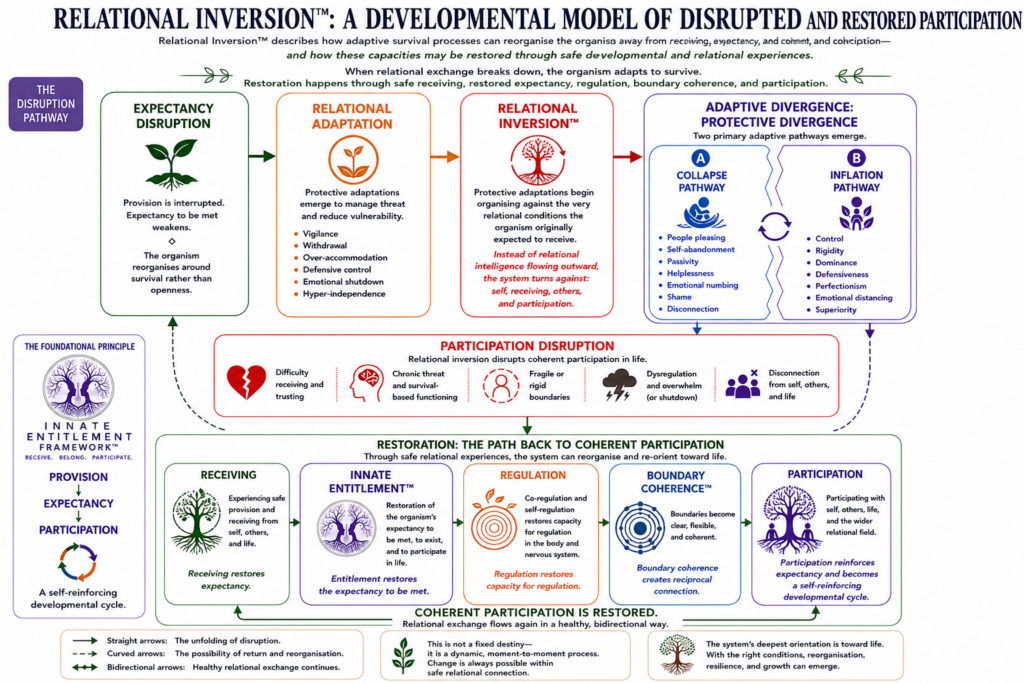
Figure 2. Relational Inversion™: From Disruption to Restoration within the Innate Entitlement Framework™
Most models of psychological distress focus primarily on symptoms, diagnoses, trauma, or coping strategies. While each offers valuable clinical insights, the Innate Entitlement Framework™ approaches emotional suffering from a different developmental perspective.
Rather than beginning with pathology, the Framework begins with relationship.
It proposes that many of the difficulties people experience throughout life may not represent defects within the individual, but adaptive reorganisations of disrupted relational development.
Relational Inversion™ describes one of the central developmental processes through which this reorganisation can occur.
As explored in the previous article on Bidirectional Relationality™, healthy human development unfolds through continuous reciprocal exchange between the organism and its relational environment. From the earliest stages of life, development is supported through ongoing provision, responsiveness, regulation, and participation within relationships.
When these relational conditions are sufficiently supportive, development naturally organises toward expectancy, belonging, regulation, boundary coherence, and coherent participation in life.
Healthy development, however, is not guaranteed.
When relational environments become persistently unsafe, inconsistent, intrusive, neglectful, emotionally overwhelming, traumatically dysregulating, or developmentally miscalibrated, the organism does not simply remain unchanged.
It reorganises.
Protective adaptations begin to emerge.
What originally developed through openness gradually becomes organised around protection.
What originally supported participation increasingly becomes organised around survival.
This developmental reorganisation forms the foundation of what the Innate Entitlement Framework™ describes as Relational Inversion™.
Relational Inversion™ as a Developmental Process
Relational Inversion™ describes the gradual process through which adaptive protective responses begin to interfere with coherent relational participation.
The system does not lose its capacity for adaptation.
Rather, adaptation becomes organised around different priorities.
What originally supported development becomes increasingly difficult to trust.
Receiving from life becomes more uncertain.
Support may begin to feel threatening.
Closeness may evoke vigilance rather than safety.
Expression may become increasingly guarded.
Participation may become effortful or avoided altogether.
From the perspective of the Framework, the organism is not malfunctioning.
It is adapting intelligently to the relational conditions it has repeatedly encountered.
The challenge is not that protection exists.
The challenge is that protection gradually becomes organised against the very relational conditions that originally supported healthy development.
Healthy Development Begins with Expectancy
As explored in the previous article, healthy human development begins within continuous provision.
Long before conscious awareness emerges, life is already providing the conditions necessary for development.
Oxygen.
Nutrition.
Warmth.
Containment.
Protection.
Regulation.
The developing organism contributes nothing in return.
It first receives.
Through repeated experiences of sufficiently consistent relational provision, the organism’s original biological expectancy becomes progressively strengthened and organised through lived experience.
Within the Innate Entitlement Framework™, this strengthening of expectancy is described as Innate Entitlement™.
Innate Entitlement™ does not refer to privilege, superiority, or excessive expectation.
It refers to the organism’s biological expectancy to be met, to exist, and to participate in life.
As this expectancy becomes increasingly reinforced, Biological Belonging™ emerges.
The organism gradually experiences itself as existing within a relational world capable of supporting life.
From this developmental foundation, increasingly coherent psychological organisation unfolds.
Regulation strengthens.
Boundary coherence develops.
Participation becomes progressively more flexible, reciprocal, and integrated.
This represents healthy developmental organisation.
When expectancy is repeatedly strengthened through relational experience, development naturally moves toward increasing coherence.
However, when relational conditions repeatedly fail to support this expectancy, the organism must reorganise in order to preserve survival.
Expectancy Disruption
Expectancy disruption marks the point at which the organism repeatedly encounters relational conditions that no longer reliably support its biological expectancy to be met.
The relational world becomes increasingly unpredictable.
Instead of openness, vigilance begins to develop.
Instead of trust, caution emerges.
Instead of fluid participation, protective organisation gradually takes precedence.
The nervous system begins reorganising around uncertainty.
Attention shifts from exploration toward monitoring.
Participation becomes increasingly influenced by the anticipation of potential threat.
This reorganisation should not be understood as weakness or failure.
It represents an adaptive developmental response.
The organism is attempting to preserve life under conditions that no longer reliably support the expectancy upon which healthy development originally depended.
Rather than continuing to organise around openness, the system increasingly organises around protection.
This protective reorganisation lays the developmental foundation for the next stage of the process: Relational Adaptation™.
Relational Adaptation™
Protective adaptations are intelligent developmental responses to disrupted relational conditions.
They emerge when the organism repeatedly encounters environments that no longer reliably support its expectancy to receive, to be met, and to participate safely in relationship.
These adaptations are not random.
They represent coherent attempts to preserve survival under conditions that have become emotionally, psychologically, or relationally costly.
The relational environment may be experienced as inconsistent, intrusive, neglectful, overwhelming, traumatically dysregulating, or developmentally miscalibrated. In response, the organism reorganises.
The direction of development begins to change.
Rather than organising primarily toward openness, reciprocity, and participation, the system increasingly organises around protection.
Importantly, disruption is not limited to obvious trauma or neglect.
Relational adaptation may also emerge within environments characterised by chronic over-accommodation, overprotection without differentiation, inconsistent relational signalling, poorly calibrated reciprocity, role reversal, emotional parentification, or relational patterns that unintentionally undermine the gradual development of autonomous selfhood.
Development does not depend solely upon the presence of care.
It also depends upon how care is organised.
When relational experiences repeatedly interfere with the organism’s developing expectancy, protective adaptations begin to emerge.
These adaptations may include:
- Hypervigilance
- Withdrawal
- Emotional shutdown
- People-pleasing
- Defensive control
- Over-accommodation
- Perfectionism
- Hyper-independence
- Emotional distancing
Within the Innate Entitlement Framework™, these patterns are not viewed as personality flaws or evidence of pathology.
They represent adaptive relational reorganisations.
The organism is learning:
- how to minimise risk
- how to reduce vulnerability
- how to preserve connection where possible
- how to survive within the relational conditions available
From this perspective, adaptation reflects intelligence.
The organism is doing exactly what it has evolved to do.
It is reorganising in order to sustain life.
Relational Inversion™
Protective adaptation is not, in itself, problematic.
Indeed, without the capacity to adapt, survival would often be impossible.
The difficulty emerges when protection gradually becomes self-reinforcing.
Over time, the very adaptations that once protected development begin to interfere with it.
The system increasingly organises against the relational conditions that originally supported healthy development.
Receiving from life becomes increasingly difficult, even when safe opportunities for receiving are available.
Support may evoke suspicion rather than relief.
Closeness may activate vigilance rather than safety.
Expression may become increasingly guarded.
Need may become associated with shame, disappointment, abandonment, intrusion, rejection, or vulnerability.
Participation becomes progressively more effortful.
The organism is no longer simply adapting to disruption.
It begins anticipating disruption.
The original expectancy to be met gradually becomes reorganised around the expectation of interruption, disappointment, or threat.
Relational exchange increasingly becomes organised around defence rather than openness.
This developmental shift is what the Framework describes as Relational Inversion™.
Relational intelligence has not disappeared.
It remains active.
However, its organising direction has changed.
Instead of orientating primarily toward reciprocal participation, it increasingly orientates toward protection.
The organism continues to demonstrate remarkable intelligence.
It monitors.
It predicts.
It prepares.
It protects.
The tragedy is not that protection exists.
The tragedy is that protection gradually becomes organised against the very relational conditions that originally allowed development to unfold.
Within the Innate Entitlement Framework™, Relational Inversion™ therefore represents neither illness nor defect.
It represents a coherent developmental reorganisation shaped by repeated relational experience.
Understanding this distinction fundamentally changes the therapeutic question.
Rather than asking,
“What is wrong with this person?”
the Framework asks,
“How has this person’s relational intelligence reorganised in response to the developmental conditions they have experienced?”
This shift moves the focus away from blame, pathology, and personal inadequacy.
Instead, it invites us to understand emotional suffering as an adaptive developmental process that, under sufficiently safe relational conditions, may gradually reorganise once again toward coherence, reciprocity, and participation.
A Biological Parallel
A useful biological parallel helps illustrate the organising principle of Relational Inversion™.
In autoimmune conditions, the organism’s protective systems become organised against the very body they evolved to protect.
Protection itself is not the problem.
The problem lies in the direction of protection.
Protective intelligence becomes misdirected.
Relational Inversion™ proposes a psychologically analogous pattern.
Adaptive protective organisation gradually becomes directed against the very relational conditions that originally supported healthy human development.
Receiving becomes difficult.
Support becomes threatening.
Closeness becomes uncertain.
Participation becomes increasingly organised around defence rather than openness.
The issue is not that protection exists.
The issue is what protection has become organised against.
Within the Innate Entitlement Framework™, this reflects a broader organisational principle that appears repeatedly across multiple levels of human functioning.
Although the expression differs, the underlying developmental logic remains recognisable.
We may observe similar patterns in:
- biological self-attack
- psychological self-attack
- relational self-sabotage
- family systems organised around chronic defence
- organisational cultures structured around protection rather than collaboration
- broader societal patterns in which reciprocity gradually gives way to mistrust, polarisation, and defensive organisation
The pattern changes form.
The organising principle remains remarkably similar.
Relational Inversion™ therefore represents more than an individual psychological process.
It describes an organising pattern that may emerge wherever adaptive protection gradually becomes directed against the very conditions that originally supported life, growth, and coherent participation.
Adaptive Divergence: Collapse and Inflation
Protective adaptation does not organise in exactly the same way for everyone.
Within the Innate Entitlement Framework™, two broad patterns commonly emerge.
These are not rigid categories or diagnostic labels.
Rather, they represent different expressions of the same underlying adaptive logic.
Collapse
Collapse reflects adaptive withdrawal.
Participation is reduced in order to minimise perceived relational risk.
The nervous system increasingly organises around reducing exposure rather than expanding participation.
This may present as:
- passivity
- self-doubt
- people-pleasing
- emotional shutdown
- helplessness
- withdrawal
- diminished self-expression
- avoidance of conflict
- difficulty expressing needs
The underlying adaptive logic is simple:
If I reduce myself, I reduce risk.
The organism attempts to preserve safety by becoming smaller within the relational field.
Participation narrows.
Visibility decreases.
Need becomes increasingly hidden.
Although this strategy may reduce immediate relational threat, it often carries significant long-term costs for development, connection, and wellbeing.
Inflation
Inflation reflects adaptive defensive expansion.
Rather than reducing participation, the organism attempts to establish safety through increased control of the relational environment.
Safety becomes organised around distance, certainty, control, performance, or dominance.
This may present as:
- rigidity
- defensiveness
- emotional distancing
- perfectionism
- over-control
- hyper-independence
- difficulty receiving support
- excessive self-reliance
- chronic mistrust
At times, inflation may also resemble what is commonly described in everyday language as entitlement.
This can include:
- exaggerated self-importance
- grandiosity
- relational dominance
- excessive expectation without reciprocity
- narcissistic defensive organisation
Within the Innate Entitlement Framework™, these patterns are not understood as expressions of healthy Innate Entitlement™.
Rather, they are protective distortions that emerge when relational development has been repeatedly organised around defence.
The underlying adaptive logic remains remarkably similar:
If I control the relational field, I reduce risk.
Although collapse and inflation appear very different on the surface, they represent two expressions of the same developmental reorganisation.
Both attempt to preserve safety.
Both reduce vulnerability.
Both reflect intelligent adaptation to disrupted relational conditions.
Neither represents personal failure.
Participation Disruption
As protective organisation becomes increasingly established, participation itself begins to change.
Life gradually becomes something to manage rather than something to join.
Relationships become harder to trust.
Receiving from others becomes increasingly difficult.
Receiving from life itself may also become constrained.
Expression narrows.
Curiosity diminishes.
Boundaries become unstable, either collapsing under relational pressure or becoming increasingly rigid in an attempt to prevent further threat.
The nervous system increasingly organises around survival rather than reciprocal participation.
Many people continue functioning remarkably well.
They work.
They care for others.
They achieve.
They perform.
From the outside, life may appear successful.
Internally, however, participation often feels defended, disconnected, emotionally costly, or exhausting.
The organism remains active.
But much of its energy is devoted to maintaining protection rather than engaging freely with life.
From the perspective of the Innate Entitlement Framework™, this is not simply reduced functioning.
It represents a disruption in the organism’s capacity to participate coherently within the relational field.
Participation has not disappeared.
It has become reorganised around survival.
Restoration
One of the central propositions of the Innate Entitlement Framework™ is that Relational Inversion™ is adaptive, but it is not irreversible.
If protective organisation develops through repeated relational experience, then restoration can also begin through new relational experience.
Healing does not begin by forcing the nervous system out of defence.
Nor does it begin by removing every protective adaptation that has helped the organism survive.
Protection developed for a reason.
The task is not to eliminate protection.
The task is to create relational conditions in which protection gradually becomes less necessary.
Restoration begins when the organism encounters sufficiently safe developmental and relational experiences that allow expectancy to be strengthened once again.
Receiving gradually becomes less threatening.
The possibility of being met begins to feel imaginable.
The organism slowly relearns that relationship can support life rather than compromise it.
Within the Framework, restoration is not viewed as a single event.
It is a developmental process.
Receiving becomes increasingly possible.
Expectancy gradually strengthens.
Regulation becomes more stable.
Boundary Coherence™ begins to reorganise.
Participation slowly becomes more flexible, reciprocal, and coherent.
Importantly, these changes do not occur only through relationships with other people.
Although the therapeutic relationship often provides an important developmental context, restoration may also occur through increasingly healthy relationships with oneself, with meaningful others, with one’s environment, and with life itself.
As relational conditions become more coherent, protective organisation no longer needs to remain permanently dominant.
Participation gradually becomes available once again.
This is not the creation of a new self.
It is the gradual restoration of capacities that became reorganised in response to developmental necessity.
The organism is not becoming someone different.
It is recovering increasing freedom to participate in life without remaining organised primarily around protection.
Bringing It All Together
Relational Inversion™ offers a developmental explanation for how coherent participation may gradually become reorganised around survival.
Rather than viewing emotional distress primarily as evidence of pathology or dysfunction, the Innate Entitlement Framework™ proposes that many forms of psychological suffering may reflect intelligent adaptation to disrupted relational conditions.
This perspective builds upon established developmental, relational, and neurobiological understandings while proposing a distinct organising principle centred on expectancy, relational exchange, adaptation, and participation.
Within the Framework, the central question is not simply:
“What symptoms are present?”
Nor even:
“What happened?”
It also asks:
“How has the organism reorganised in response to what happened?”
This shift moves attention away from blame and toward understanding.
Protective adaptations are recognised for what they are:
Intelligent developmental responses that once served survival.
Healing therefore involves more than reducing symptoms.
It involves creating sufficiently coherent relational conditions in which expectancy can gradually strengthen, protection becomes less necessary, and participation becomes increasingly possible.
Within the Innate Entitlement Framework™, healing is understood not as the removal of protective adaptation, but as the gradual restoration of the relational conditions in which protection becomes less necessary and coherent participation becomes possible again.
Development is a living relational process.
And when that process becomes inverted, restoration remains possible.
Previous Article
Bidirectional Relationality in Human Development within the Innate Entitlement Framework™
Next Article
Restoration Begins in Relationship
⸻
© Janaína Mahé. All rights reserved.
The Innate Entitlement Framework™, Receiving™, Innate Entitlement™, Biological Belonging™, Boundary Coherence™, Relational Participation™, Environment as Second Skin™, Relational Inversion™, Nervous System Achievement™, Mindful Attribute Boundaries™, Existential Embodied Participatory Presence™, Conscious Boundlessness™, and associated concepts, models, diagrams, terminology, developmental architecture, and visual representations are the intellectual property of Janaína Mahé and may not be reproduced, adapted, taught, distributed, published, or commercially used, in whole or in part, without prior written permission.
About the Author & the Framework
Janaína Mahé is the developer of the Innate Entitlement Framework™, an original conceptual framework exploring human development, relational participation and psychological wellbeing.
This article forms part of the ongoing conceptual development of the Framework.
Continue exploring the Framework
→ Why the Innate Entitlement Framework™ Matters