


Human beings are often taught to adapt to life, manage it, or survive it—but rarely to understand their relationship with it. The Innate Entitlement Framework™ proposes that psychological wellbeing emerges from our capacity to remain in regulated participation with life itself, rather than becoming organised around survival. By integrating biology, neuroscience, and relational development, this model offers a new lens through which emotional struggles and human potential can be understood.
Academic Defence
Innate Entitlement Framework™
⸻
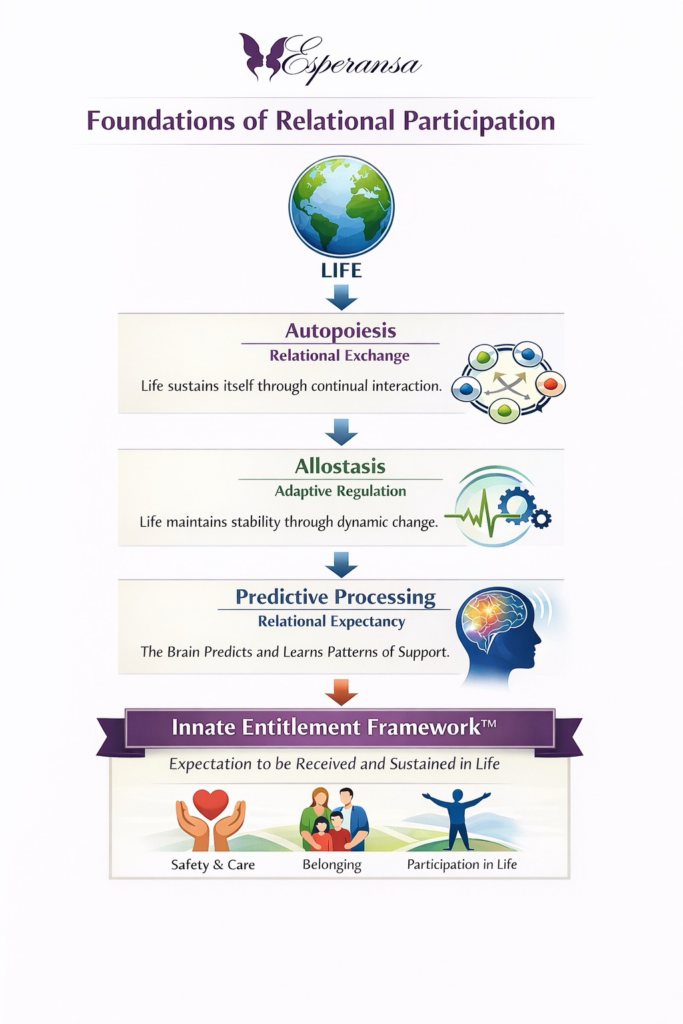
Figure 1. Foundations of Relational Participation
This diagram illustrates the biological and neuroscientific foundations of the Innate Entitlement Framework™, integrating principles of autopoiesis (relational exchange), allostasis (adaptive regulation), and predictive processing (relational expectancy). The framework proposes that human psychological wellbeing emerges from the capacity to maintain regulated relational participation with life, grounded in an expectancy to be received and sustained.
The Innate Entitlement Framework™ proposes that human wellbeing emerges from our capacity to remain in relationship with life itself. This model brings together biological, neurological, and relational processes into a single developmental perspective, offering a new way of understanding psychological health and human experience. The diagram above presents the foundational principles that support this framework.
⸻
The Innate Entitlement Framework™ is a psychotherapeutic paradigm that proposes a shift in how psychological development and wellbeing are understood. While many existing models focus on trauma, attachment, cognition, or behaviour, this framework introduces a broader organising principle: that human psychological health emerges from the organism’s capacity to remain in regulated relational participation with life itself.
Rather than locating development solely in postnatal relationships or internal processes, the framework integrates biological, relational, and experiential dimensions into a single developmental arc. It proposes that human beings are not only shaped by their past or their relationships with others, but by their ongoing relationship with life as a living, relational process.
⸻
Foundations of Relational Participation
This framework is grounded in established scientific principles that demonstrate that life itself is inherently relational and adaptive.
At the biological level, living systems sustain themselves through continuous interaction with their environment. This principle is described in autopoiesis, which explains how organisms maintain themselves through ongoing relational exchange.
At the physiological level, organisms maintain stability through adaptive change. This process, known as allostasis, allows the nervous system to respond dynamically to environmental demands rather than remaining fixed.
At the neurological level, the brain continuously generates expectations about the world. Predictive processing describes how perception and behaviour are shaped by predictive models that anticipate environmental and relational responses.
Taken together, these principles suggest that life is organised through relational exchange, adaptive regulation, and expectation.
The Innate Entitlement Framework™ extends this understanding into psychological development, proposing that human wellbeing depends on the restoration of regulated participation in life as a relational process.
⸻
Prenatal Foundations of Relational Expectancy
Emerging research across developmental neuroscience, epigenetics, and prenatal psychology indicates that learning and adaptation begin before birth.
The fetal nervous system is capable of detecting and responding to patterns such as the maternal voice, heartbeat, and physiological rhythms. These early sensory experiences demonstrate that neural systems are already organising around patterned input during prenatal development.
At the same time, maternal physiological and emotional states influence fetal development through hormonal signalling, autonomic regulation, and epigenetic processes. Variations in maternal stress, regulation, and emotional environment have been shown to affect fetal nervous system development and later stress responses.
These findings indicate that the fetus develops within a dynamic relational environment, rather than in isolation.
Within the Innate Entitlement Framework™, this prenatal environment of continuous physiological support is understood as the earliest context in which the organism begins to organise around patterns of receiving and regulation. From this, a foundational biological expectancy emerges: the expectancy to be received and sustained in life.
This does not imply conscious belief, but rather early neural and physiological organisation around patterns of support or stress. These patterns form the earliest layer of relational expectancy, which is later shaped, reinforced, or disrupted through postnatal relational experiences.
⸻
From Survival to Participation in Life
When relational environments are consistent and responsive, this early expectancy is reinforced. The organism develops the capacity for:
•regulation
•belonging
•boundary formation
•relational engagement
When relational environments are inconsistent, neglectful, or threatening, this expectancy may be disrupted. The organism reorganises around defensive strategies such as:
•hypervigilance
•emotional withdrawal
•relational avoidance
•chronic stress responses
In these states, individuals are no longer participating in life—they are surviving it.
Therapeutic processes that provide attunement, regulation, and relational safety allow the nervous system to gradually reorganise. As predictive models are updated and regulation is restored, individuals begin to move from survival toward participation.
⸻
Clinical Observation
In therapeutic practice, a consistent pattern of change can be observed.
Individuals first experience being received and understood. This is followed by emotional expression and integration, often after long periods of suppression or disconnection. As this process unfolds, a reconnection with self begins to emerge, alongside increased clarity, confidence, and internal stability.
Relational functioning improves, communication becomes more authentic, and boundaries begin to stabilise. Over time, individuals start to re-engage with life, the future, and their own sense of possibility.
Clients often describe this shift in simple but powerful terms:
“I feel like myself again.”
“I can move forward.”
“I feel alive again.”
These expressions reflect not only symptom relief, but a restoration of participation in life itself.
⸻
Core Proposition
The Innate Entitlement Framework™ proposes that:
Psychological wellbeing emerges from the organism’s capacity to maintain regulated relational participation with life, grounded in a foundational expectancy to be received and sustained.
When this participation is disrupted, individuals become organised around survival. When it is restored, individuals regain the capacity to engage with life, relationships, and experience in a coherent and meaningful way.
⸻
Contribution of the Framework
This framework introduces several key contributions:
•It extends developmental understanding to include prenatal relational conditions
•It integrates biological, neurological, and psychological processes into a unified model
•It reframes entitlement as a biological expectancy rather than a social construct
•It positions psychological health as participation in life rather than symptom absence
•It provides a developmental sequence linking receiving, belonging, boundary formation, and relational engagement
By bringing together insights from multiple disciplines, the Innate Entitlement Framework™ offers a new lens through which human development, distress, and therapeutic change can be understood.
⸻
Human beings are not only shaped by their past or their relationships with others. They are shaped by their capacity to remain in relationship with life itself.
The restoration of this relationship is not simply the reduction of symptoms, but the return to living, rather than merely existing.