

Many people grow up feeling that they must earn love, approval, or belonging. Over time this can create the impression that our value must constantly be proven in order to deserve care or attention. But what if human life actually begins with a very different assumption — that we are meant to be received by the world around us?
This idea may sound surprising at first.
We are born entitled.
In everyday language, the word entitled is usually used negatively. It often describes someone who expects special treatment, behaves selfishly, or believes they deserve more than others.
But when we look closely at the beginning of human life, something very different appears.
Life itself is already given before the organism can do anything in return. Existence arrives first. Only then does the developing human organism begin to receive what is necessary to survive and grow.
In other words, something must be given before receiving becomes possible.
The something that is given first is life itself.
From that moment, the organism begins to respond through an expectancy to be received and sustained by the environment.
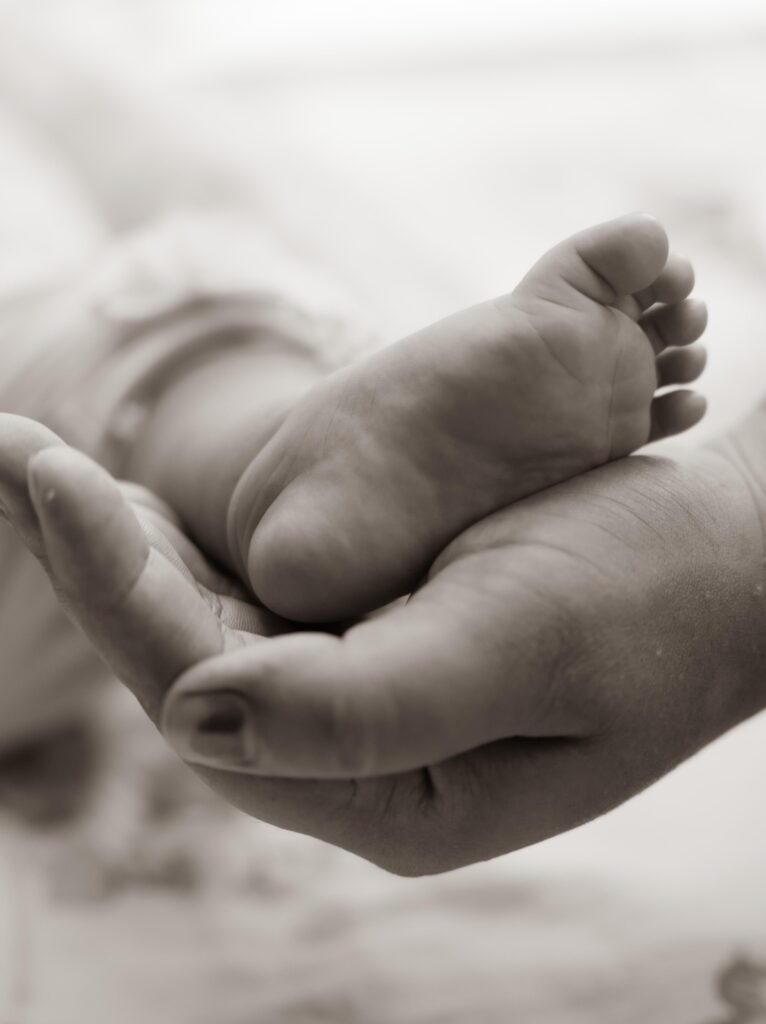
Before we can speak, think, or act independently, every human being comes into the world completely dependent on the relational world that surrounds them. A newborn cannot survive alone. Life depends entirely on being received, sustained, and supported by others.
In this sense, entitlement is not arrogance or privilege. It is a biological condition of life.
Every human being begins existence with an expectancy to be received and sustained by the relational environment.
The Expectancy to Be Received in Human Development
From the very beginning of development, life unfolds through processes of receiving.
Before birth, the developing organism receives oxygen, nutrients, and protection through the maternal environment. After birth, survival continues through receiving care, nourishment, warmth, and emotional connection.
This process is not learned. It is not negotiated. It is simply how life begins.
The human organism therefore enters the world with an implicit expectancy that the environment will sustain life.
Life begins through receiving.
And through that receiving, relationship begins.
When Entitlement Becomes Distorted
In psychology and everyday conversation, entitlement is often described as a problematic personality trait.
People may be described as entitled when they expect too much, feel superior to others, or demand special treatment without considering others.
But this kind of entitlement is not the original condition. It is often a distortion that develops later in life.
When the natural expectancy to be received and supported is disrupted, human beings adapt in different ways.
Some people move toward collapse, feeling undeserving of care, love, or support. They may minimise their needs, avoid asking for help, or feel uncomfortable receiving attention or care.
Others move toward inflation, developing defensive forms of entitlement in which they demand from the world what they do not feel safe receiving.
Both responses can be understood as attempts to regulate a deeper developmental disruption.
Seen in this way, entitlement is not the problem. The problem arises when the original expectancy to receive is not safely supported.
A Different Perspective on Emotional Struggles
The Innate Entitlement Framework™ proposes that human beings begin life with a biological expectancy to be received and sustained by their relational environment.
Psychological development can therefore be understood through how this expectancy is met, supported, or disrupted throughout life.
When the relational environment is able to receive and regulate the developing child, a natural process of growth unfolds. The individual gradually develops a sense of belonging, healthy boundaries, and the capacity to participate in life with others.
When this expectancy is disrupted, individuals may struggle with self-worth, emotional regulation, boundaries, and relationships.
In my counselling work, I often see how early relational environments shape the way people experience themselves and others.
Seen from this perspective, many emotional struggles are not signs of personal failure. They are often intelligent adaptations to environments that could not consistently meet the developmental need to be received.
Rethinking the Beginning of Human Life
Understanding that we are born entitled invites us to rethink many assumptions about psychological development.
Human beings do not begin life trying to prove their worth.
Life begins with an expectancy that existence itself will be supported.
Over time, experiences shape how safe or unsafe that expectancy becomes.
Therapeutic work often involves helping people reconnect with this deeper foundation of their humanity — restoring the capacity to receive support, form healthy boundaries, and participate in life with greater coherence.
In this sense, the sentence that initially sounds uncomfortable reveals something surprisingly simple.
We are born entitled not to privilege, but to the conditions that allow life to unfold.
Looking Ahead
If human life begins with an expectancy to be received by the relational environment, an important question naturally follows.
What happens when that expectancy is not consistently met?
Understanding how human beings adapt when the environment struggles to receive them helps explain many of the emotional difficulties people experience later in life.
This is what we explore in the next article.